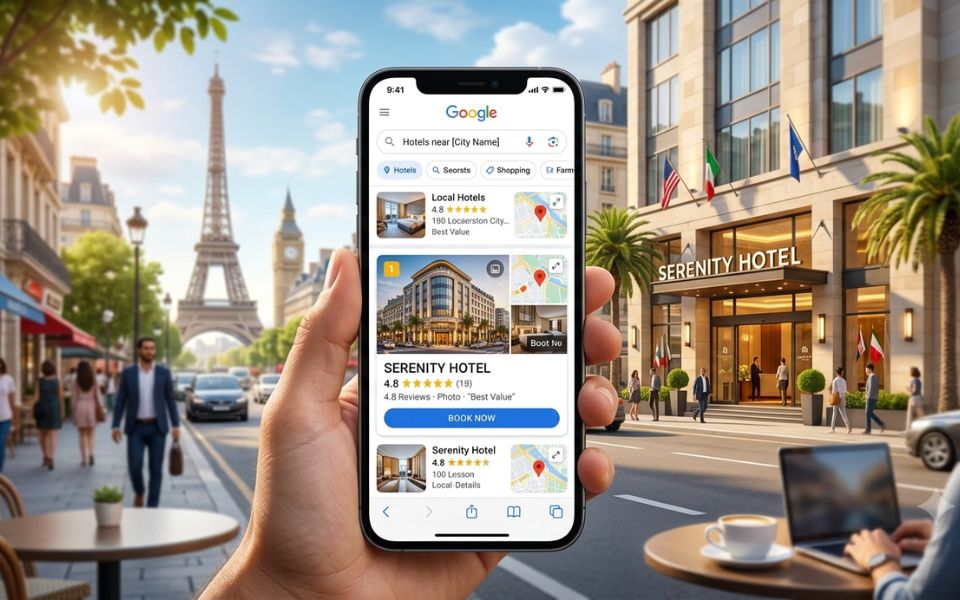
In today’s digital era, most guests don’t just pick a hotel out of thin air. Many start their journey on Google—searching for recommended areas to stay, comparing prices, checking reviews, and hunting for the best deals before finally booking.
The question is: Is your hotel easy to find when potential guests search on Google?
Many hotel owners still believe that appearing on Google requires complicated SEO tactics, months of waiting, or a dedicated digital marketing team. In reality, there are several straightforward steps you can take to boost your online visibility without diving straight into complex SEO strategies. In the world of hotel e-commerce, being discoverable online is a critical factor in driving direct bookings, reducing reliance on OTAs, and increasing overall revenue.
Here are a few simple ways to help your hotel show up on Google search without the SEO headache:
1. Ensure Your Google Business Profile Is Fully Optimized
The first step—and often the most overlooked—is optimizing your Google Business Profile (formerly known as Google My Business).
When someone searches for "hotels near Ubud", "villas in Bali", or "best beachside hotels", Google displays results based on location relevance, business information, and profile activity. Make sure your hotel’s information is complete and up to date, including:
- Accurate hotel name
- Precise address
- Active contact phone number
- Operating hours
- Official website link
- High-quality, updated photos of your rooms and facilities
- Hotel amenities
- Direct booking links
Additionally, post regular updates such as promotions, upcoming events, special stay packages, or announcements. Google favors active profiles over those that are set up and forgotten.
2. Target What Guests Are Actually Searching For, Not Just Your Brand Name
A common mistake in hotel marketing is focusing exclusively on the brand name—for example, "ABC Villa Bali".
While it’s essential to be searchable by people who already know your brand, what about travelers who haven't heard of you yet?
Potential guests typically search using phrases like:
"Hotels near Bali beaches"
"Private villa with private pool"
"Honeymoon hotels in Bali"
"Hotels near central Ubud"
"Boutique hotels in Bali"
Naturally incorporate these keywords into your hotel website, room listing pages, blog posts, facility descriptions, and promotion landing pages. The goal isn't to stuff as many keywords as possible, but rather to help Google understand that your property is relevant to what travelers are searching for.
3. Create Content That Answers Guest Questions
SEO isn't just about keywords; it's about providing answers to the questions users are asking. For instance, a traveler planning a trip to Bali might search:
"Best area to stay in Bali for first-timers"
or
"What to do while staying in Ubud?"
Your hotel can publish blog articles addressing these topics and tie them into the staycation experience your property offers. For example, write an article titled "5 Reasons Why Ubud Is Perfect for a Tranquil Bali Getaway." Within the article, highlight nearby attractions, local activities, neighborhood perks, and a recommended itinerary.
Content like this does double duty: it improves your search engine presence and builds trust with prospective guests.
4. Optimize Your Hotel Website for Conversions
Your website should do more than just display pretty photos—it needs to guide prospective guests toward making a booking decision. Essential elements every hotel website should have:
High-Quality Visuals: Guests want to preview their experience. Ensure photos of rooms, amenities, dining areas, and surrounding views look professional.
Detailed Information: Clearly state room dimensions, guest capacity, amenities, house policies, and location details.
Clear Call-to-Action (CTA) Buttons: Don't make guests search for a way to reserve. Use prominent buttons like "Book Now", "Check Availability", or "Get Best Rate". The smoother the booking process, the higher your conversion rate.
5. Leverage Guest Reviews to Build Trust
Reviews play a pivotal role in the hotel booking decision process. Before making a reservation, travelers carefully review Google ratings, guest comments, customer photos, and how management responds.
Encourage satisfied guests to leave a review after their stay. However, don't just focus on the quantity of reviews—quality and context matter too.
A simple review like "Great hotel!" is nice, but detailed feedback like "The location is extremely close to central Ubud, and the rooms are spacious and comfortable for families" gives Google much better context about your business.
6. Implement a Hotel E-Commerce Strategy to Reduce OTA Dependency
While OTAs like Booking.com or Agoda help fill rooms, hotels still need to build strong direct booking channels.
This is where hotel e-commerce comes into play. It’s not just about selling rooms online; it’s about optimizing the entire guest journey—from the initial Google search and website visit to comparing offers and completing the booking.
Effective tactics include:
- Creating dedicated promotional landing pages
- Running Google Ads targeted at high-intent booking keywords
- Optimizing website conversion rates
- Offering exclusive perks for direct bookings
With the right strategy, hotels can significantly capture a higher share of direct reservations.
7. Don't Overlook Website Speed & Mobile Friendliness
A slow website will cause prospective guests to leave before they even see your offers. Google also factors user experience heavily into search rankings.
Make sure:
- Your website loads quickly on mobile devices
- Image file sizes are optimized
- Navigation is simple and intuitive
- The booking form is fast and easy to complete
Since the vast majority of travelers search for accommodations using smartphones, a seamless mobile experience is non-negotiable.
In a fiercely competitive hospitality industry, combining a solid hotel marketing strategy with smart e-commerce practices is the key to ensuring your property isn't just found—it gets booked.
If you want to boost your hotel's visibility on Google and maximize online sales, a targeted digital strategy will help unlock more direct booking opportunities.
ecommerceloka helps hospitality businesses develop data-driven digital strategies to elevate online performance, optimize sales channels, and scale revenue streams.