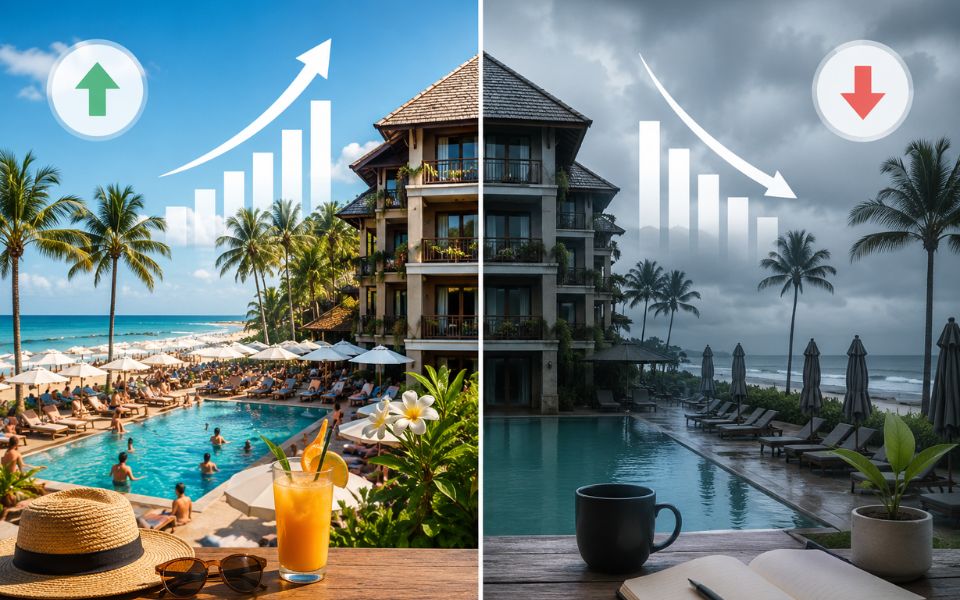
Peak Season vs. Low Season: How They Affect Hotel Prices
When searching for a hotel for your vacation, you may have noticed that room rates change even though the room type and facilities remain the same. A room priced at IDR 800,000 per night during one period could increase to IDR 1,500,000 during the holiday season. At other times, the same room may drop to below IDR 700,000.
These price changes don't happen without reason. Hotels use pricing strategies based on market demand. When demand increases, room rates typically rise. Conversely, when the number of travelers declines, hotels often offer more competitive prices to maintain occupancy.
These periods are commonly known as peak season and low season. Understanding the difference between the two is not only beneficial for travelers looking for the best rates but also essential for hotel operators in developing sales strategies and maximizing revenue.
What Is Peak Season?
Peak season refers to the period when demand for hotel rooms is at its highest. During this time, the number of travelers increases significantly, resulting in high occupancy rates, with many hotels reaching full capacity.
Peak season generally occurs during:
School holidays
Eid al-Fitr holidays
Christmas and New Year
Long weekends
International holiday seasons
Major events such as festivals, concerts, or conferences
In tourist destinations like Bali, peak season is also influenced by international travel trends, particularly during the middle and end of the year.
What Is Low Season?
In contrast, low season is the period when tourist arrivals decline, resulting in lower demand for hotel rooms compared to other times of the year.
During this period, hotels generally experience lower occupancy rates, and competition to attract guests becomes more intense.
Although low season is often considered less profitable, it actually presents an opportunity for hotels to implement marketing strategies, strengthen customer loyalty, and attract new market segments.
Why Do Hotel Prices Change Between Peak Season and Low Season?
Hotel room rates are not fixed throughout the year. Most hotels apply dynamic pricing, a strategy that adjusts room rates based on market conditions and customer demand.
When demand increases during peak season, room availability becomes more limited. In this situation, hotels can increase their rates because many guests are still willing to book.
On the other hand, during low season, hotels typically adjust their pricing to remain competitive and attract more guests.
In addition to demand, hotel pricing is influenced by several factors, including:
Occupancy rate
Nearby competitors
Ongoing events
Length of stay
Booking window
Search and booking trends
Hotel Strategies During Peak Season
Peak season offers hotels an excellent opportunity to maximize revenue. However, the strategy goes beyond simply increasing room rates. Common approaches include:
1. Gradually Adjusting Room Rates
Hotels often begin increasing prices well before the holiday period starts, using demand forecasts and booking patterns.
2. Reducing Unnecessary Discounts
Since demand is already high, hotels don't need to offer large promotions that could reduce potential revenue.
3. Applying a Minimum Length of Stay
During certain periods, hotels may require guests to stay for at least two or three nights to maximize revenue.
4. Increasing Revenue from Ancillary Services
Beyond room sales, hotels can boost revenue by offering dining packages, spa treatments, airport transfers, or local tour experiences.
Hotel Strategies During Low Season
Low season doesn't necessarily mean hotels should dramatically reduce their prices. Instead, the primary objective is to maintain occupancy while protecting profitability.
Common strategies include:
Offering staycation packages
Providing long-stay promotions
Partnering with companies or travel agencies
Increasing digital marketing activities
Running email campaigns for previous guests
Adding value through complimentary breakfast, late check-out, or other perks instead of relying solely on discounts
These strategies often create greater perceived value than competing on price alone.
Why Is Revenue Management So Important?
Managing the price differences between peak and low season cannot rely on guesswork alone. Hotels need accurate data to determine when prices should increase, remain stable, or be adjusted.
This is where revenue management becomes essential.
By analyzing historical data, occupancy levels, booking trends, and competitor activity, hotels can develop more accurate pricing strategies. The goal is not simply to sell as many rooms as possible, but to maximize revenue from every available room.
This approach helps hotels maintain the right balance between occupancy and profitability, regardless of whether demand is high or low.
How Ecommerceloka Helps Optimize Hotel Pricing
Today, hotel pricing is no longer managed manually. With an integrated hotel eCommerce system, hotels can update room rates in real time across multiple distribution channels, including their official website and online travel agencies (OTAs).
In addition to maintaining pricing consistency, an integrated system enables hotels to monitor the performance of each sales channel, understand guest booking behavior, and respond to market changes more quickly.
If you're looking to optimize your pricing strategy, improve OTA management, increase your online visibility, and build a hotel eCommerce ecosystem that drives more direct and online bookings, Ecommerceloka is ready to help your hotel develop an effective and sustainable digital strategy