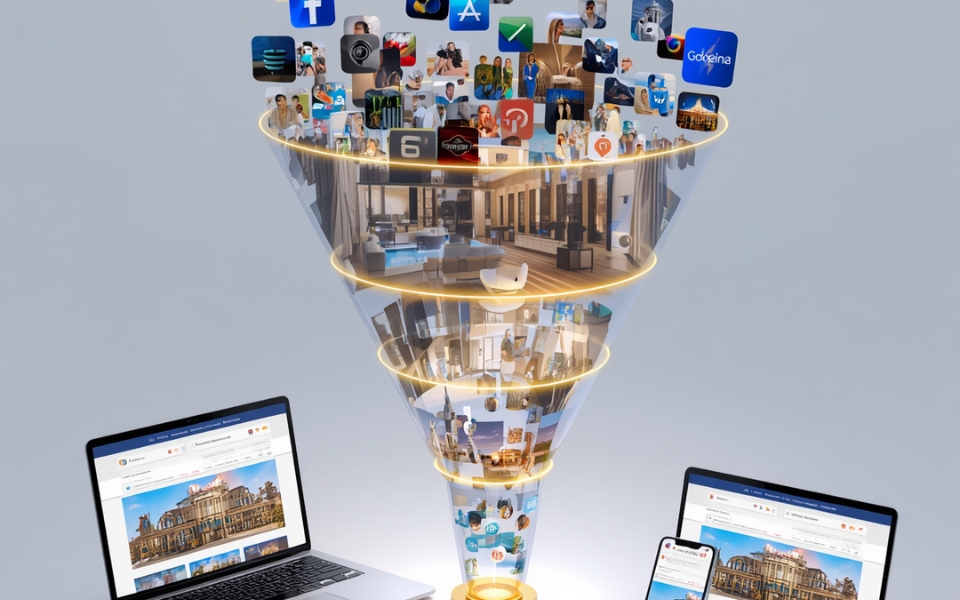
Many hotels are already actively marketing, with Instagram accounts running, ads running, websites generating traffic, and even reels sometimes receiving high views. But strangely, bookings still feel stagnant. This situation is quite common in the hospitality industry. And usually the problem isn't a lack of exposure for the hotel, but rather an inadequately established marketing funnel.
This is especially true for resorts, villas, and luxury stays. Travelers now tend to conduct more extensive research before finally deciding to book. They check out the property's ambiance, check reviews, compare prices, stalk Instagram, visit OTAs, and ensure the location and experience are right for them. All of these processes are actually part of the hotel marketing funnel.
What is a Hotel Marketing Funnel?
Simply put, a marketing funnel is the process of converting people who initially just "browsed" into actual booking guests. So, it's not just about generating traffic. Because high traffic without conversion ends up being just a vanity metric, this is why many hotels sometimes feel like their ads are "busy but not profitable." However, an audience who is viewing a hotel for the first time is certainly different from an audience who is ready to book.
Travelers Don't Book as Quickly as They Used to
Traveler behavior has changed significantly in recent years. People are now more visual, more impulsive, and also more willing to compare. Someone might find a hotel on TikTok or Instagram Reels, then search on Google a few days later. After that, they check reviews on OTAs, check competitor prices, and finally book via WhatsApp or their website. Of course, all these journeys are different, making the marketing funnel crucial, especially for hotels looking to increase direct bookings and become less reliant on OTAs.
Stage One: When People Are New to the Hotel
In the initial stages, the primary goal isn't to directly sell. The more important thing is to build attention and get people to stop scrolling, because hospitality is highly visual. Content like room tours, floating breakfasts, sunset views, jungle ambiance, or cinematic experiences usually works much better than the hard sell of "book now." Especially in markets like Bali, travelers want to visualize the experience before they actually book, and this is something many hotels often forget. They jump too quickly to promotions and discounts, even though the audience hasn't yet established an emotional connection with the property.
Once Interested, Audiences Start to Compare
At this stage, potential guests usually become more serious. They start visiting the hotel website, checking prices, comparing with other properties, looking at amenities, and even searching for reviews from previous guests. This is where many hotels lose potential bookings. Sometimes it's not because the hotel is bad, but because the digital experience isn't convincing. The website is too slow, the photos aren't compelling, the information isn't clear, or the booking process is too complicated. If they don't find the information they need within a few seconds, they usually close the page and move on to another hotel.
Modern Hotel Funnel = Digital Experience
In the past, booking a hotel might have been simpler. Now, almost every decision is influenced by online visibility. From social media, Google, OTAs, to content creator reviews. Sometimes even a single Instagram reel can create significant demand for a property. Therefore, the hotel marketing funnel is now inseparable from content and digital marketing. Traffic is important, but the quality of attention is far more important.
If your hotel or villa wants to increase direct bookings, strengthen its digital presence, and build a more conversion-focused marketing funnel, the ecommerceloka team is ready to help tailor your digital strategy to your property's needs.