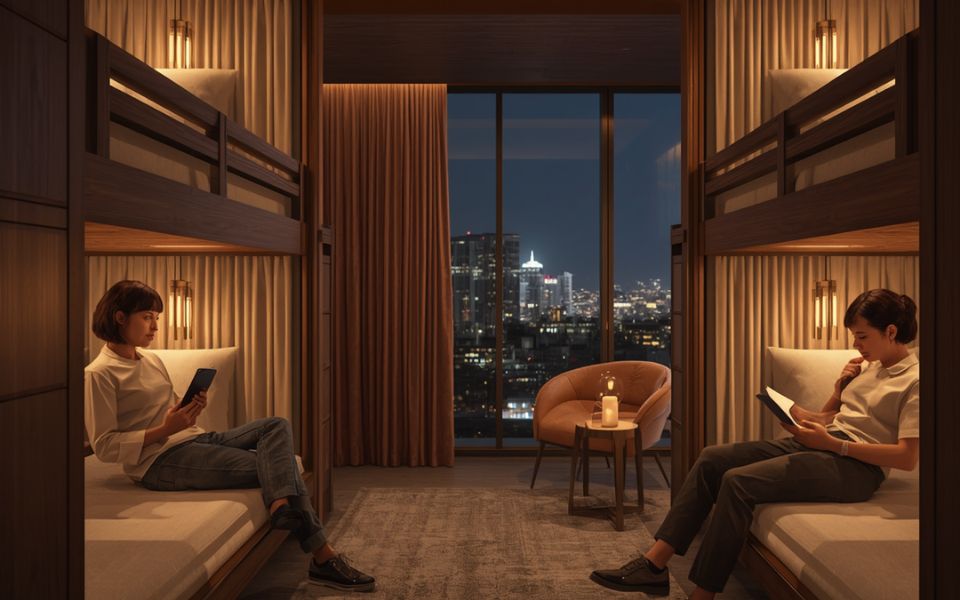
In recent years, the dormitory concept has become increasingly common in tourist cities, backpacker areas, and even digital nomad destinations like Bali. Not just cheap hostels for foreign travelers, many dormitories are now more modern, comfortable, and even have aesthetic designs, making them suitable for remote workers. But what exactly is a dormitory? And how is it different from a regular hotel?
What Is a Dormitory?
A dormitory is a type of accommodation where guests share a room with several other guests. Typically, a dormitory room contains four, six, eight, or even more beds.
Each guest rents one bed, not the entire room. Because of the shared concept, dormitories are usually much cheaper than private hotel rooms. That's why dormitories are very popular among backpackers, solo travelers, student travelers, digital nomads, and long-stay guests, especially in tourist destinations like Bali, Yogyakarta, Bangkok, and Europe.
Why Are Dormitories Increasingly Popular?
Dormitories used to be synonymous with cheap and simple accommodations. But now the market has expanded significantly. Many properties are starting to combine the concepts of social experience, community, coworking, and lifestyle travel. This has led to the emergence of several types, including boutique hostels, capsule dormitories, luxury hostels, and co-living concepts. This is especially true in areas like Canggu and Ubud, which are filled with remote workers and digital nomads. Some travelers are now deliberately choosing dormitories not only because they're affordable, but also because they want to meet other travelers, network, enjoy a more social atmosphere, and enjoy a more relaxed stay.
Differences Between Dormitories and Hotels
This is something that often causes confusion.
Functionally, both are places to stay. But the concept of the experience is quite different. Dormitories typically offer a bed, shared rooms, shared bathrooms, more communal facilities, and more affordable prices. They usually have shared areas such as a common room, pantry, coworking area, and shared kitchen. The atmosphere also tends to be more relaxed and social. Hotels, on the other hand, offer privacy, personal comfort, a focus on service, and private facilities. Guests typically rent private rooms, private bathrooms, room service, and more complete facilities. Therefore, hotel prices are usually higher than dormitories.
Why is the Dormitory Concept Attractive for the Hospitality Business?
From a business perspective, dormitories offer quite attractive revenue potential. This is because a property can sell multiple beds in one space. For example:
One private room might sell for IDR 700,000, but a six-bed dormitory at IDR 180,000 can generate significantly more revenue.
Furthermore, operational costs can be more efficient than multiple private rooms. This is why the dormitory concept is quite popular for hostels, surf camps, co-living, and budget hospitality, especially in tourist areas with high backpacker traffic.
Challenges of Managing a Dormitory
Although seemingly simple, dormitories also present their own challenges, as the guest experience is greatly influenced by cleanliness, privacy, security, noise, bed quality, and community atmosphere. Bad reviews often arise from noisy guests, unclean rooms, uncomfortable shared bathrooms, or poorly maintained facilities. Therefore, dormitory operations still require high hospitality standards.
Amid the rising trends of backpackers, digital nomads, and long-stay travelers, the dormitory concept is now an attractive opportunity in the hospitality world. However, in today's digital age, having a unique concept isn't enough. Properties also need the right digital marketing strategy to make them easier to find for potential guests and consistently increase occupancy.
If you want to increase your property's visibility and generate more direct bookings, the ecommerceloka team is ready to help you design a digital strategy tailored to your hospitality business needs.